/ 03 of 05
Read 4 min ·
Skim 1 min
Invoices freelancers send on day one
The share of new users who sent an invoice in their first week rose from 38% to 71%.
Role
Senior product designer (contract)
Team
1 PM, 3 engineers, 1 growth marketer
Timeline
4 months, Mar to Jun 2024
Platform
Web app
Skim mode: key sentences, key images and the outcome only. (4 min)
Context
Tally is invoicing software for freelancers: designers, translators, developers, photographers. A thirty-day free trial leads to a paid plan at €9 a month. In 2024 I spent four months as contract designer on the stretch from sign-up to first invoice. The team was a product manager, three engineers and a growth marketer who knew the funnel numbers by heart. The company has nine people, and the founders had been the support team for two years, so they knew exactly which emails customers sent.
Problem
New users signed up and met a six-step setup: business name, logo, tax number, payment terms, bank details and a first client. Only then could they make an invoice.
Users who did not invoice in week one almost never paid: 6% by day 30, against 41% of those who did. Only 38% sent one in their first week. The marketing team had been trying to fix this with emails reminding people to finish setup. The emails were the symptom.
Research
I watched twelve freelancers sign up on a screen share and asked each to open their last real invoice first. Most pulled it from a Word file or a Google Doc, and several had it open before they had finished creating an account.
Freelancers sign up with an invoice already in mind, because someone owes them money today. Setup was not part of the product for them. It was the obstacle between them and getting paid.
I came here to bill Anders for €1,800. Why is it asking for my logo?
Translator, eight years freelancing
The funnel data from 1,900 March trials said the same thing in numbers. The median new user opened the settings pages four times and the invoice editor once.
I also traced where the six steps came from. Each had been added for a good reason, usually after a complaint: a tax number for a German customer, a logo after a design review. Nobody had ever taken a step out.
Decisions
Start with the invoice, not the settings
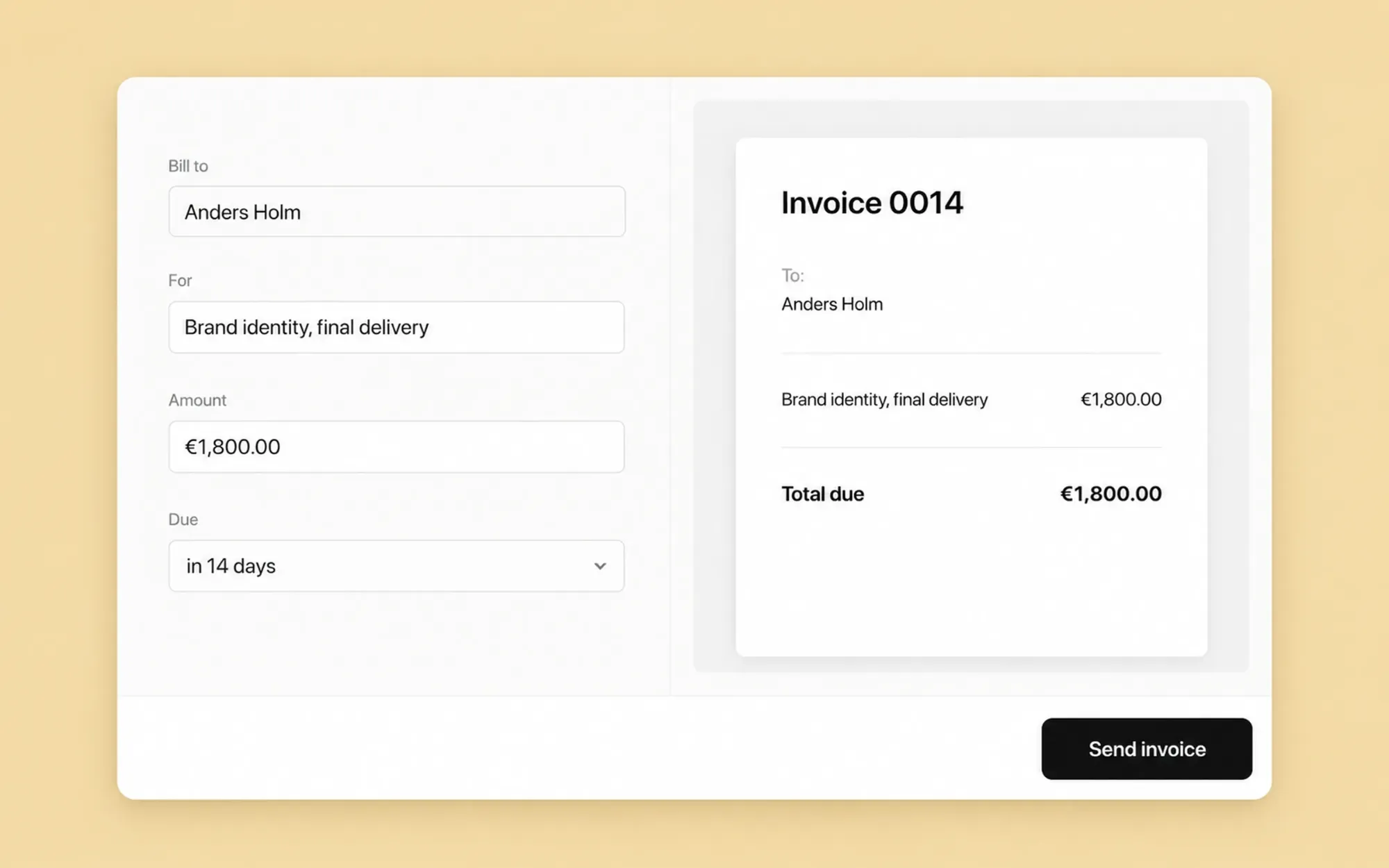
The first screen after sign-up is now an invoice: who it is for, what for, how much. Business details are asked for at the moment of sending, when the reason is obvious. We cut the required setup from six steps to three fields: your name, your bank account and the client’s email. The engineering cost was modest, because the invoice editor already existed. What changed was the order of the doors, plus a “finish later” sheet that asks for the three missing details only when you press Send.


Drag to compare the first screen after sign-up: from setup to the invoice itself. Or focus the slider and use the arrow keys.
Defaults are policy
Currency comes from the browser locale, tax from the country and the due date is 14 days. Smart defaults do most of the setup, and each one is visible and one tap from changing. Defaults have consequences. In the first month 2.1% of invoices went out with the wrong VAT rate, so we added a short check before sending that names the tax rate in words.
What didn’t work: importing your last invoice
The obvious idea was to let people upload their last invoice and read it automatically. We prototyped it with a PDF parser. It read 54% of invoices correctly, and a wrong invoice is worse than an empty one, so we cut it. We kept the smaller idea inside it: “Copy from an old invoice”, for users who already have one in Tally.
A preview you can trust
The editor shows the real PDF as you type, not a form that turns into a PDF later. What you see is what the client gets. Freelancers told us they distrust invoices they cannot see, because they are the ones who look unprofessional if it goes wrong.
Outcome
71%
send an invoice in week one, up from 38%
19
min
median time to a first sent invoice, was 26 hours
+6
pts
trial-to-paid conversion
In the eight weeks after launch, 71% of new users sent an invoice in their first week, up from 38%. The median time from sign-up to a first sent invoice dropped from 26 hours to 19 minutes, and trial-to-paid conversion rose by six points. Wrong-VAT flags settled at 0.4% once the check line shipped. We kept a 10% holdback group for the full eight weeks, so the numbers are not just a good month.
Reflection
I would have measured the cost of the shortcut earlier. The wrong-VAT invoices were a trust problem, and trust problems arrive late. Fewer questions up front moved the effort to the moment of sending, where it matters more. If I did it again I would test the send screen with accountants in week one, not week twelve, because they are the people who read these invoices next. The founders were braver than I expected. When the first reading showed fewer completed business profiles, they said that was the point and looked at invoices instead.